Thursday, August 23, 2012

Important Facts about Davao City

Davao City, Davao del Sur, Davao River, Maguindanao, Philippines, Matina, Provinces, Asia, Davao Delights


The population in Davao City has grown to almost a hundred times in a century. 

8,560 in 1903
1.5 million in 2011
2.7 million in 2036


There are 4.54 persons 
in every household in Davao City


6 of 25 people in Davao City live in Rural Barangays

Important Facts About Kadayawan sa Dabaw Festival in Davao City

Apo Duwaling Festival, Davao City, Davao delights, Dayaw, Joey Ayala, Kadayawan Festival 2012, King of Festivals, Madayaw, Marie Rose Cadorna Escalada, Pahinongod, Samrah Nuh

  • The Kadayawan sa Dabaw Festival originated from the tradition of thanksgiving amongst the indigenous communities called Pahinongod. Various farm tools, baskets of fruits, trays of colorful native orchids, rice and corn grains and vegetables were displayed on mats as thanksgiving to the Almighty for the year's bountiful harvest.
  • In the seventies, Mayor Elias B. Lopez, a Bagobo, initiated feasts in the poblacion with representatives from the different ethno-linguistic groups Tagabawa, Clata, Ata, Manobo, Mandaya and the Islamized Indigenous Communities. They performed dances and rituals of thanksgiving.
  • The first title of the feast "Kadayawan sa Dabaw" was "Apo Duwaling Festival". It was a contraction from the things the city was known for: Mt. Apo, Durian and Waling-Waling. The first festival was done in 1986 which was aimed at promoting Davao as a peaceful city. Early on, feasts were not as grand and the Apo Duwaling Festival revived celebration of colorful festivals. This was organized by the Floriculture Industry Council of Southern Mindanao (FICSMIN).
  • In 1988, "Apo Duwaling" was renamed "Kadayawan sa Dabaw" which is Dabawnon expression for anything that is good, excellent and brings great fortune. It was derived from the aboriginal word "dayaw" meaning good or "madayaw" referring to things of great value, profitable, superior or beneficial.
  • In the year 2005 until 2010, Kadayawan was revered as the Festival of Festivals. This was so having various festivals such as Mindanao Indigenous Dance Festival, the World Music Festival (Tugtog, later known as Tunog Mindanao), the Indigenous Music Festival (Agongan or Kulintangan), the Indigenous Peoples Festival and the River Festival. In 2011, the tag line was changed to King of Festivals.
  • The Hiyas sa Kadayawan was originally a model search conceptualized to contribute to the growing fashion industry in the city. In 2007, it was changed to a competition among young, indigenous ladies who are knowledgeable of the culture and history of the indigenous community they represent. The first model Hiyas 1997 was Marie Rose Cadorna Escalada and the first indigenous Hiyas 2007 was Samrah Nuh, a Kagan.
  • The Kadayawan Theme Song was composed by Joey Ayala, 2000 Datu Bago Awardee.

10 Tribes of Davao City - Maranao part (10-10)

Davao City, Sarimanok, Lanao, Islam, Davao del Sur, Davao River, Maguindanao, Maranao, Tribes in Davao City, Davao delights


This is the last part of the list of 10 tribes in Davao.

Maranao
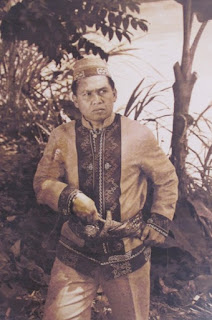
Davao City, Sarimanok, Lanao, Islam, Davao del Sur, Davao River, Maguindanao, Maranao, Tribes in Davao City, Davao delights
Deputy Mayor Gapor "Randy" A. Usman, Al Haj

Maranao means "people of the lake" with Lanao as their homeland referred to as lake. Like other Muslim tribes, they are brave and historically offered sacrifice in defense of their homeland and Islam. They are rich in literature the most famous of which is the Darangen.

Davao City, Sarimanok, Lanao, Islam, Davao del Sur, Davao River, Maguindanao, Maranao, Tribes in Davao City, Davao delights

The Maranao musical heritage revolves around the kulinlang, a specific type of gong which plays sounds peculiar to their culture.

Davao City, Sarimanok, Lanao, Islam, Davao del Sur, Davao River, Maguindanao, Maranao, Tribes in Davao City, Davao delights

Maranaos are best known for sophistication in wood and metal crafts like the impressive torogan, a special house built for a Maranao maiden; design motifs called okil, examples of which are the Sarimanok and Naga which are creative renditions of a cock and its fish and a dragon or snake, respectively.

The Maranao is also known for their exceptional textiles of ornate designs and colors reflective of the social status of the wearer. The Malong is a classic example.

Davao City, Sarimanok, Lanao, Islam, Davao del Sur, Davao River, Maguindanao, Maranao, Tribes in Davao City, Davao delights

If there is one trait noticeable among the Maranao is their large involvement to market trade which makes a Maranao community widely visible in every city and town in the Philippines.

The Maranaos are in the districts of Poblacion, Talomo, Bunawan, Buhangin, Toril, Tugbok, Calinan and Marilog Districts.

LinkWithin

Related Posts Plugin for WordPress, Blogger...